Parade Ship: A Detailed Evaluation of a Whimsical Display Font for Creative Projects
Selecting the right typography is often the most critical decision in visual design, yet it remains one of the most overlooked aspects of brand identity. While many designers default to safe, standard typefaces to ensure readability, there are specific moments when a project demands more personality. This is where Parade Ship enters the conversation as a distinctive option. It is not merely a font; it is a stylistic statement characterized by its cute and charming aesthetic, designed to inject whimsy and a touch of quirkiness into any layout.
For professionals aged 20 to 50 who are constantly evaluating resources, understanding the nuances of a display font like Parade Ship requires looking beyond simple aesthetics. It involves analyzing how the typeface functions within a hierarchy, how it interacts with other design elements, and whether its unique character aligns with the intended message. This evaluation explores what makes Parade Ship distinct, compares it against broader categories of display fonts, and helps determine the specific scenarios where this tool shines or falls short.
Understanding the Distinct Character of Parade Ship
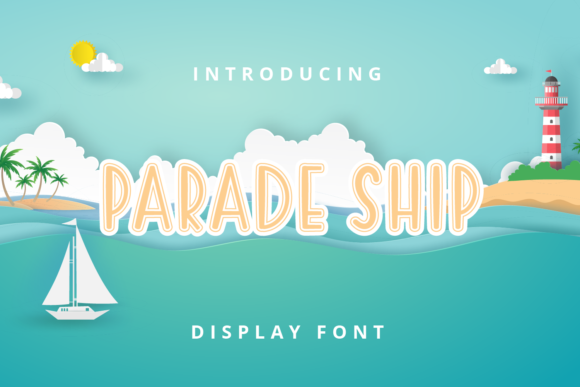
At its core, Parade Ship is defined by its playful nature. Unlike traditional serif or sans-serif fonts that prioritize neutrality, Parade Ship embraces a hand-drawn quality that feels approachable and friendly. The letterforms are rounded and slightly irregular, avoiding the rigid geometry found in corporate typefaces. This "quirky" attribute is not accidental; it is engineered to evoke a sense of fun and nostalgia.
The font's charm lies in its ability to soften a design without sacrificing legibility at larger sizes. When used as a display type—meaning for headlines, titles, or key graphical elements—it acts as an emotional anchor. It suggests that the content following it is lighthearted, creative, or perhaps aimed at a younger demographic. However, this distinctiveness comes with a caveat: Parade Ship is not a utility font. It is designed to be seen, not read extensively. Its strength is in its visual impact rather than its endurance over long passages of text.
The Balance Between Quirkiness and Readability
One of the primary challenges with whimsical fonts is maintaining clarity. Parade Ship manages to walk this line effectively by keeping the x-height relatively generous and the stroke contrast low. This ensures that even with its decorative curves, the letters remain distinct from one another. For designers comparing options, this balance is crucial. Many similar fonts become illegible when scaled down or placed against busy backgrounds. Parade Ship's structure allows it to stand out confidently while still being decipherable at a glance.
Evaluating Parade Ship Against Broader Design Categories
To make an informed decision, it is helpful to view Parade Ship within the context of available alternatives. The market for display fonts is vast, generally falling into categories such as geometric, retro, handwritten, and grotesque styles. How does Parade Ship compare to these established groups?
- Geometric Fonts: Geometric typefaces rely on perfect circles and straight lines to convey modernity and precision. They are excellent for tech brands or minimalist designs. Parade Ship stands in direct contrast here. Where geometric fonts feel cold and calculated, Parade Ship feels organic and warm. If a project requires a futuristic or sterile look, Parade Ship would be a poor fit.
- Retro and Vintage Styles: Many vintage fonts aim to replicate specific eras, such as the 1970s or 1950s. While Parade Ship has a nostalgic feel, it does not strictly adhere to a historical period. Instead, it offers a timeless, storybook quality. This makes it more versatile than era-specific fonts, which can sometimes date a design too quickly.
- Handwritten Scripts: Script fonts mimic actual handwriting, often featuring connecting strokes and variable thickness. Parade Ship shares the human element of scripts but avoids the fluidity that can hinder readability. It is blockier and more structured than a cursive script, making it easier to integrate into grids and layouts where flow is essential.
When evaluating these categories, the decision often comes down to the desired emotional response. If the goal is to communicate stability and logic, a geometric or grotesque font is superior. If the goal is to spark joy, curiosity, or a sense of play, Parade Ship moves to the top of the list.
Strengths, Tradeoffs, and Practical Applications
No single typeface is a universal solution. Understanding the tradeoffs of using Parade Ship is essential for responsible design. By acknowledging both its strengths and limitations, designers can avoid common pitfalls.
Primary Strengths
The most significant advantage of Parade Ship is its immediate ability to set a tone. In a digital landscape saturated with uniform sans-serifs, a font like Parade Ship breaks through the noise. It is particularly effective for:
- Event Branding: Birthday invitations, children's parties, or community festivals benefit from the celebratory nature of the font.
- Product Packaging: Items targeting families, toys, snacks, or craft supplies often require packaging that looks inviting and tactile. Parade Ship adds a layer of perceived value through its charm.
- Editorial Headers: Magazine features, blog posts, or newsletters that focus on lifestyle topics can use Parade Ship to create a friendly, conversational voice.
Key Limitations and Tradeoffs
The very qualities that make Parade Ship charming also limit its application. Its strong personality can overpower subtle design elements. If used as body text, it creates visual fatigue and reduces reading speed significantly. Furthermore, because of its specific style, it may clash with serious or professional contexts. Using Parade Ship for a law firm, a financial institution, or a medical clinic would likely undermine the credibility of the organization.
Another consideration is compatibility. Because Parade Ship is a display font, it relies heavily on pairing with neutral supporting typefaces. A successful design will typically pair Parade Ship with a clean, understated sans-serif or a classic serif for body copy. Without this contrast, the design can appear chaotic or unbalanced.
Decision Factors: When to Choose Parade Ship
Choosing the right resource for a project involves a series of strategic questions. Before adding Parade Ship to your toolkit, consider the following factors to ensure it is the right choice.
- What is the primary emotion you want to convey? If the answer involves happiness, creativity, or innocence, Parade Ship is a strong candidate. If the emotion required is authority, trust, or seriousness, you should look elsewhere.
- Where will the text appear? Evaluate the medium. On a large billboard or a website hero section, the quirks of Parade Ship can be appreciated fully. On a small mobile screen or a dense data table, the font's complexity may cause rendering issues or confusion.
- Who is the target audience? While adults aged 20–50 appreciate good design, they also recognize when a font is appropriate. A font that feels too childish can alienate adult audiences unless the context is clearly ironic or niche. Ensure the font matches the maturity level of the consumer base.
- Is there a need for hierarchy? Parade Ship excels at creating a clear visual hierarchy by distinguishing headlines from body text. If your project relies on subtle distinctions between sections, this font might be too loud. It works best when you need a bold statement.
Integrating Parade Ship into Professional Workflows
For experienced designers, integrating a new font into a workflow is about more than just selecting a file. It is about establishing a system. When incorporating Parade Ship, it is advisable to create a dedicated style guide. Define exactly where the font can be used (e.g., H1 headers only) and establish strict rules for pairing. This prevents the font from becoming a crutch that is applied indiscriminately across all projects.
Furthermore, testing is vital. What looks good on a high-resolution monitor may not translate well to print materials. Parade Ship's unique curves and weights should be tested in various formats to ensure ink spread or pixelation does not degrade the charm of the letterforms. In some cases, adjusting the tracking (letter-spacing) slightly can improve the overall balance, preventing the letters from feeling too cramped or too loose.
Conclusion on Suitability and Selection
Parade Ship represents a specific niche in the typographic landscape: the intersection of cuteness and functionality. It is a tool that, when used correctly, can transform a mundane design into something memorable. However, its power is also its limitation. It demands respect and restraint. It is not a font for every situation, nor should it be expected to solve every design problem.
By understanding its distinct character and comparing it thoughtfully against other options, designers can make confident decisions. Whether you are brightening up a children's book cover or adding a splash of personality to a local bakery's signage, Parade Ship offers a reliable way to express whimsy. The key lies in knowing when to deploy it and when to choose a more neutral alternative. With careful planning and an eye for balance, this charming font can indeed brighten up each of your designs, delivering results that are both visually striking and emotionally resonant.