Sundown Sunrise Font Evaluation
In the landscape of digital typography, selecting the right typeface is often a balancing act between aesthetic appeal and functional readability. Sundown Sunrise has emerged as a distinct option for designers seeking a modern, organic, and versatile display font. Unlike standard sans-serif or serif families that prioritize neutrality, this typeface offers a unique character that can elevate visual hierarchy in specific contexts. This evaluation explores the capabilities of Sundown Sunrise, analyzing its design philosophy, practical applications, and the tradeoffs involved in integrating it into professional projects.
Understanding the Design Characteristics
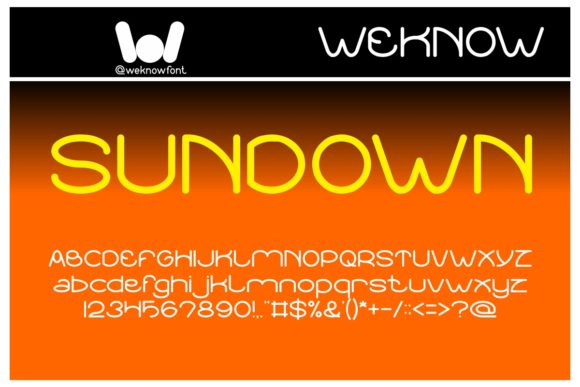
Sundown Sunrise is defined by its blend of contemporary structure with organic irregularities. The term "modern" suggests a clean baseline, likely utilizing geometric influences common in current web design trends. However, the "organic" descriptor indicates that the letterforms are not rigidly uniform. They likely feature subtle variations in stroke weight, terminal shapes, or spacing that mimic natural forms or hand-drawn aesthetics without sacrificing legibility.
This duality is crucial for understanding where the font fits. It is not merely a decorative script, nor is it a strict grid-based sans-serif. Instead, it occupies a middle ground that allows it to function as a statement piece while maintaining enough structural integrity to be read clearly at larger sizes. The versatility mentioned in its description stems from this ability to adapt to various moods, ranging from warm and inviting to sharp and sophisticated, depending on the kerning and styling choices made by the designer.
Primary Use Cases and Applications
When considering Sundown Sunrise for a project, the most immediate consideration is the medium. As a display font, its primary strength lies in high-impact areas rather than body text. The following scenarios represent strong candidates for its use:
- Web Design Headlines: In an era where users scan content rapidly, a unique header can capture attention. Sundown Sunrise is well-suited for hero sections, landing page titles, or navigation elements where brand personality needs to be established instantly.
- Print Collateral: Business cards, invitations, and posters benefit from the font's texture. On paper, the organic details can create a tactile feel through ink spread and paper grain interaction, adding a layer of sophistication that flat digital fonts often lack.
- Branding Identity: For businesses aiming to appear approachable yet modern, such as artisanal food brands, lifestyle boutiques, or creative agencies, this font provides a "unique touch" that distinguishes the logo or tagline from generic competitors.
The font's capacity to serve as a focal point means it should generally be paired with a more neutral secondary typeface. A clean, simple sans-serif or a classic serif works best to complement the complexity of Sundown Sunrise, ensuring that the overall composition remains balanced.
Benefits of Selecting Sundown Sunrise
The decision to incorporate this font involves several tangible advantages. First, the versatility allows for cross-platform consistency. Because it balances modern geometry with organic flair, it can transition relatively smoothly from a mobile app interface to a large-scale billboard, provided the sizing is adjusted appropriately.
Second, the distinctiveness of the typeface helps mitigate the risk of design homogeneity. Many web templates rely on the same few popular Google Fonts, leading to a saturated visual market. Using Sundown Sunrise signals a deliberate choice and can enhance perceived brand value by suggesting a custom, thoughtful design process.
Finally, the organic nature of the letters often resonates better with audiences seeking authenticity. In marketing psychology, perfectly straight lines can sometimes feel sterile or corporate. The slight imperfections inherent in Sundown Sunrise can humanize a brand, making it feel more relatable and grounded.
Tradeoffs and Limitations
No single typeface is a universal solution, and Sundown Sunrise has specific limitations that must be acknowledged during the selection process. The most significant constraint is its role as a display font. Attempting to use it for long-form body copy, technical documentation, or dense data tables will likely result in reduced readability and increased cognitive load for the reader.
Additionally, the unique characteristics of the font may present compatibility challenges. While modern web technologies have improved font rendering, highly stylized glyphs can sometimes render inconsistently across different operating systems or browsers if the font files are not optimized correctly. Designers must test the font rigorously on target devices to ensure that the organic details do not break or disappear on smaller screens.
There is also the consideration of audience perception. If the goal is to convey extreme precision, such as in a financial institution or a medical device company, the organic qualities of Sundown Sunrise might inadvertently suggest a lack of rigidity or seriousness. In these cases, the font's warmth could be misinterpreted as unprofessionalism.
Comparative Considerations and Alternatives
Evaluating Sundown Sunrise requires looking at what alternatives exist for similar goals. If the primary need is purely geometric modernity without the organic variation, a strict geometric sans-serif like Futura or Montserrat might be a better fit. These options offer cleaner lines and higher legibility at small sizes but lack the distinctive character of Sundown Sunrise.
Conversely, if the project requires a more traditional, hand-crafted look, a dedicated script or brush font might be necessary. While Sundown Sunrise offers a modern take on organic styles, it may not provide the fluidity required for elegant wedding invitations or luxury fashion branding that relies on calligraphic traditions.
Designers should also consider variable font technology. If Sundown Sunrise is available as a variable font, it offers greater flexibility in adjusting weight and width, which can further enhance its utility. If it is only available as static weights, the range of stylistic expression may be limited compared to more robust type families.
Decision-Making Framework
To determine whether Sundown Sunrise aligns with your specific goals, consider the following checklist before finalizing the selection:
- Define the Hierarchy: Will this font be used primarily for headlines (under 100 words per screen) or body text? If it is the latter, reconsider the choice.
- Analyze the Brand Voice: Does your brand communicate warmth, creativity, and modernity? Or does it require strict formality and neutrality?
- Assess Technical Constraints: Can your development environment support the necessary font formats (WOFF2) without impacting page load speeds significantly?
- Test Readability: Create mockups with actual content. View them at the intended size on both desktop and mobile devices to ensure the organic details remain clear.
Ultimately, the success of using Sundown Sunrise depends on strategic restraint. When applied correctly as a display element, it serves as a powerful tool to differentiate a design. However, when overused or applied to unsuitable contexts, its unique features can become distractions. By carefully weighing the benefits against the potential limitations, designers can make an informed decision that enhances their project's overall effectiveness.