Indignation: A Bold Display Font for High-Impact Design
In the crowded landscape of digital and print media, capturing attention within the first few seconds is often the difference between a project that succeeds and one that fades into obscurity. This is where typography moves beyond mere readability and becomes a strategic asset. Indignation stands out in this category not as a subtle background element, but as an imposing and sharp-looking display font designed to command presence. For professionals, entrepreneurs, and creators seeking to convey authority, urgency, or modern edge, this typeface offers a distinct visual language that can elevate brand identity and campaign effectiveness.
The design community often debates the utility of display fonts versus standard body text solutions. While legibility is paramount for long-form content, display fonts serve a different purpose: they set the tone before a single word is read. Indignation enters this space with a specific character. It is engineered to be seen from a distance and felt through its angular geometry. Unlike softer, rounded sans-serifs that suggest approachability and friendliness, Indignation leans into a more assertive aesthetic. Its sharp edges and imposing structure make it an ideal candidate for headlines, posters, branding logos, and any context where the goal is to stop the scroll or draw the eye immediately.
Key Characteristics and Visual Identity
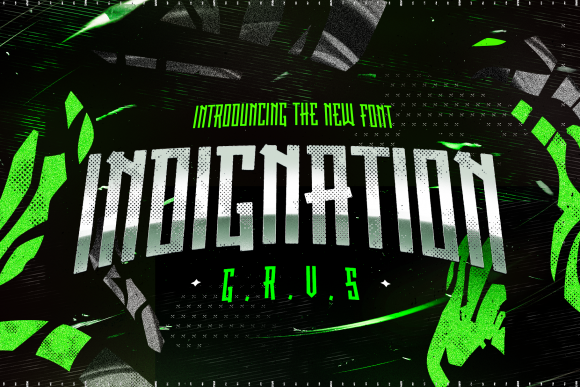
At its core, Indignation is defined by its geometric precision and high-contrast stroke widths. The letterforms feature a unique combination of tight spacing and aggressive angles, creating a sense of tension that mirrors the name. This is not a font that whispers; it speaks loudly. The sharpness of the terminals—the ends of the strokes—gives the text a blade-like quality that feels contemporary and slightly edgy.
- Geometric Rigidity: The construction relies heavily on straight lines and precise angles, avoiding the organic curves found in humanist sans-serifs. This creates a structured, almost architectural feel.
- High Contrast: Variations in line weight are used strategically to create depth and rhythm, ensuring that the letters remain distinct even at smaller sizes or when viewed from afar.
- Sharp Terminations: The cut-off points of the characters are deliberate and crisp, contributing to the overall "sharp looking" description that defines the font's personality.
These characteristics combine to form a visual identity that is difficult to ignore. When used correctly, Indignation does not just display information; it frames it. The font possesses a natural hierarchy that guides the viewer's eye, making it particularly effective for establishing a focal point in complex layouts.
Practical Application in Professional Contexts
For marketers and small business owners, the choice of typography is a direct reflection of brand values. If a company aims to project innovation, disruption, or high-end luxury, a soft or traditional serif might dilute that message. Indignation fills a niche for brands that need to communicate strength and clarity. Consider a tech startup launching a new cybersecurity product; the sharp, impenetrable look of this font aligns perfectly with themes of security and advanced technology.
In the realm of event design and publishing, Indignation proves its versatility. Event posters for concerts, conferences, or art exhibitions often require a font that conveys energy. The imposing nature of the typeface ensures that key details like dates, locations, and featured artists stand out against busy backgrounds. Similarly, book covers for thrillers, non-fiction business books, or modern art monographs benefit from the dramatic flair this font provides.
However, practical application requires discipline. Because Indignation is so visually dominant, it demands careful handling. It should not be used for paragraphs of body text. Instead, it functions best as a headline, subhead, or logo lockup. In a marketing campaign, using Indignation for the main value proposition while pairing it with a neutral, highly readable sans-serif for the supporting copy creates a balanced composition. This contrast allows the bold font to grab attention without sacrificing the usability of the message.
Evaluating Quality and Usability
From a technical standpoint, the quality of a font is measured by its kerning pairs, ligatures, and consistency across different weights. Indignation appears to be constructed with these factors in mind, ensuring that the spacing between letters remains consistent whether the text is set wide or condensed. This reliability is crucial for professional designers who cannot afford to spend hours manually adjusting tracking to fix awkward gaps.
The flexibility of the font also plays a role in its long-term value. A display font that looks good only in large sizes has limited utility. Indignation maintains its structural integrity at various scales, provided it is used appropriately. Whether scaling up for a billboard or down for a social media graphic, the sharp details do not degrade into noise. This consistency makes it a reliable asset for multi-channel campaigns where a unified visual identity is essential.
Audience Fit and Strategic Use Cases
Who benefits most from incorporating Indignation into their workflow? The answer lies in the specific goals of the creator. Professionals in the fashion industry, for instance, often rely on typography to signal trends. The sharp, modern aesthetic of Indignation fits well with high-fashion editorials and streetwear branding, where the goal is to appear cutting-edge and exclusive.
Entrepreneurs and freelancers building personal brands may also find this font valuable. In a portfolio website or a pitch deck, the cover slide sets the stage for the entire presentation. Using Indignation here signals confidence and preparedness. It suggests that the presenter has a strong vision and is not afraid to take risks. For educators or publishers creating course materials or educational resources, this font can be used effectively to highlight key concepts or chapter titles, breaking the monotony of standard text.
However, there are limitations to consider. The very qualities that make Indignation striking—its sharpness and imposing nature—can alienate audiences if misused. If a brand is trying to foster a sense of community, warmth, or accessibility, this font might create a barrier rather than a bridge. It is less suitable for healthcare organizations, child-focused products, or non-profits aiming for a gentle, empathetic tone. Understanding the emotional resonance of the typeface is just as important as understanding its visual properties.
Potential Limitations and Best Practices
No single tool is perfect for every scenario. One potential limitation of Indignation is its specificity. Because it carries such a strong personality, it can quickly become overwhelming if overused. A common mistake among designers is to apply display fonts to too many elements within a single layout, resulting in visual clutter. To avoid this, restrict the use of Indignation to primary headings and critical call-to-action buttons.
- Pairing Strategy: Always pair Indignation with a clean, understated body font. A neutral sans-serif or a classic serif will provide the necessary breathing room for the bold display text.
- Color Considerations: The sharp edges of the font work best with solid, high-contrast colors. Subtle gradients or low-contrast backgrounds may obscure the fine details of the letterforms.
- Context Awareness: Before selecting this font, evaluate the cultural and contextual implications. Ensure the "indignant" or "imposing" vibe aligns with the brand narrative you wish to tell.
Long-Term Value in Design Workflows
Investing in a high-quality display font like Indignation is an investment in the longevity of your visual assets. Trends come and go, but a well-executed typographic choice based on strong fundamentals tends to endure. The sharp, geometric style of Indignation taps into a modernist tradition that remains relevant in contemporary design. It avoids the fleeting gimmicks of novelty fonts, offering instead a robust tool that can adapt to evolving design needs.
For serious hobbyists and established agencies alike, having a library of distinctive fonts allows for greater creative freedom. Indignation adds a layer of sophistication to a designer's toolkit, providing an option when the project demands more than just standard text. It encourages experimentation and pushes the boundaries of what typography can achieve in terms of emotional impact.
Ultimately, the decision to use Indignation comes down to the specific needs of the project. It is not a universal solution, but for the right application, it is unmatched. Its ability to inspire works stems from its capacity to transform a simple headline into a statement. By exploring its endless possibilities, designers can create visuals that are not only functional but memorable. Whether you are designing a logo, a poster, or a digital banner, Indignation offers the sharp, imposing presence required to make a lasting impression in a noisy world.