Wild Child Display Font: A Practical Guide to Playful Typography for Projects and Branding
Selecting the right typeface is often the difference between a design that feels professional and one that feels authentic. For projects centered around childhood, education, or creative play, the visual tone must match the energy of the content. This is where Wild Child enters the conversation as a distinctive option in the display font category. It is not merely a decorative script; it is a carefully crafted tool designed to embody playfulness and authenticity without sacrificing readability.
When evaluating typography for children's activities, school projects, or youth-oriented branding, designers face a common challenge: finding a balance between fun and clarity. Many fonts lean too heavily into cartoonish elements that can look unprofessional or cluttered when scaled up. Others are too rigid, failing to capture the spontaneous nature of childhood. Wild Child attempts to bridge this gap, offering a style that feels hand-drawn and organic while maintaining the structural integrity required for effective communication.
Understanding the Distinct Character of Wild Child
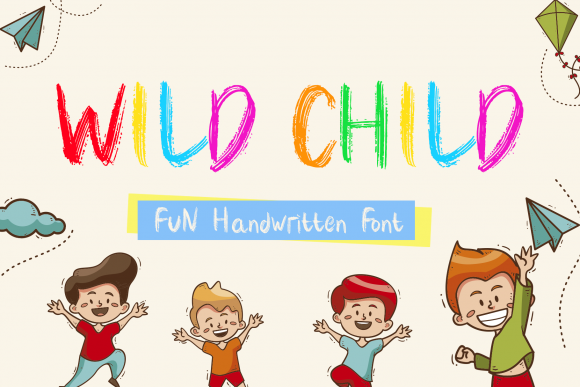
The core appeal of Wild Child lies in its ability to convey personality through simple, fluid lines. Unlike standard serif or sans-serif fonts that rely on uniformity, this display font embraces irregularities that mimic natural handwriting. The strokes vary in thickness, and the letterforms possess a slight wobble that suggests movement and life. This distinct characteristic makes it particularly effective for headlines, posters, and titles where immediate visual engagement is necessary.
What sets Wild Child apart from generic "handwritten" fonts is its deliberate simplicity. It avoids excessive flourishes, swashes, or complex ligatures that can distract the reader. Instead, it focuses on the essence of a playful script. The letters are rounded and approachable, creating an inviting atmosphere that encourages interaction. For parents, teachers, and designers looking to create materials that feel personal rather than corporate, this level of authenticity is crucial.
The font's structure allows it to function well in both uppercase and lowercase configurations, providing flexibility in layout design. Whether used for a single-word logo or a multi-line title, the consistency of the style ensures that the message remains clear. This versatility is a key factor for users who need a single font family that can adapt to various project requirements without needing to switch typefaces constantly.
Evaluating Fit: When Wild Child Is the Right Choice
Choosing a typeface is rarely about finding the "best" font in a vacuum; it is about finding the best fit for a specific context. Wild Child excels in scenarios where the goal is to evoke a sense of joy, creativity, and innocence. It is ideally suited for:
- School and Educational Materials: Worksheets, bulletin boards, and classroom decorations benefit from the friendly aesthetic of Wild Child. It helps lower the barrier to entry for learning tasks, making them appear less formal and more like games.
- Children's Activity Kits: Packaging for craft supplies, puzzle boxes, or activity books requires typography that sparks imagination. The playful nature of the font aligns perfectly with the tactile experience of hands-on activities.
- Youth Branding and Events: Camp flyers, birthday party invitations, and sports team jerseys for younger age groups often require a font that communicates energy. Wild Child provides a modern take on retro styles, fitting well within contemporary design trends that favor nostalgia and warmth.
- Personal Creative Projects: Scrapbooks, journals, and handmade cards gain a unique touch when using a font that looks human-made. The imperfections inherent in the design add a layer of charm that machine-perfect fonts cannot replicate.
In these contexts, the tradeoff is often minimal. The font prioritizes character over strict geometric precision, which is exactly what is needed to create an emotional connection with a young audience. The decision to use Wild Child here is driven by the need to establish a warm, welcoming tone that resonates with both children and the adults facilitating their experiences.
Navigating Limitations and Comparison Factors
While Wild Child is an excellent choice for specific applications, it is important to understand its limitations compared to other categories of fonts. No single typeface is a universal solution, and recognizing where it falls short is just as important as knowing where it shines. Designers and researchers should consider the following factors before committing to this font for a broader project.
Legibility at Small Sizes: Display fonts are generally optimized for large sizes, such as headlines and signage. Wild Child, with its varied stroke widths and organic shapes, may lose clarity when scaled down significantly. In situations requiring dense blocks of body text, such as long articles, instruction manuals, or fine print on packaging, a simpler sans-serif or serif font would be a more practical choice. Using Wild Child for extended reading material could lead to eye strain and reduced comprehension.
Tone Appropriateness: The strong personality of Wild Child dictates the mood of the design. It is inherently informal and whimsical. If a project requires a serious, authoritative, or minimalist tone—such as a legal document, a medical report, or a high-end luxury brand—the font would likely clash with the intended message. In these cases, the "playfulness" becomes a liability rather than an asset.
Comparison with Similar Styles: When evaluating alternatives, users often compare Wild Child against other handwritten or brush-style fonts. Some competitors in this space offer more extreme variations, featuring heavy ink splatters or erratic distortions that can be difficult to read. Wild Child differentiates itself by maintaining a cleaner line weight and better spacing. Other options might focus on a "cute" aesthetic with exaggerated roundness, whereas Wild Child strikes a balance that feels slightly more mature while still being fun. This distinction makes it a viable option for projects targeting older children or teens who might find overly childish fonts immature.
Technical Considerations: As with any specialized font, compatibility across different software platforms and devices is a factor to consider. While most modern systems handle display fonts well, ensuring that the font renders correctly on mobile devices or embedded web forms is essential. Users should verify that the font file includes the necessary character sets for their specific language needs, although Wild Child typically covers standard Latin characters effectively.
Making the Decision: Balancing Style and Function
The process of selecting Wild Child ultimately comes down to aligning the visual identity of the project with its functional goals. If the primary objective is to capture attention and convey a sense of fun, the font is a strong contender. Its ability to simplify complex ideas into approachable visuals makes it a valuable resource for educators and parents alike.
However, a balanced approach often involves pairing Wild Child with a more neutral typeface. Using the display font for headlines and the accompanying body text in a clean, legible sans-serif can create a harmonious hierarchy. This strategy leverages the strengths of Wild Child without compromising the usability of the text. It allows the designer to maintain the playful spirit while ensuring that the information is easily digestible.
For those exploring alternatives, the key is to define the specific constraints of the project first. Ask whether the audience is primarily children, if the medium is digital or print, and what the desired emotional response should be. If the answer points toward creativity, spontaneity, and warmth, Wild Child offers a compelling solution. It stands out as a font that respects the intelligence of the user while celebrating the joy of the subject matter.
In the broader landscape of typography, Wild Child serves as a reminder that fonts are tools for storytelling. They carry meaning beyond the words they spell. By choosing a font that embodies authenticity and playfulness, creators can enhance the impact of their work, making it more memorable and engaging. Whether for a school project, a community event, or a personal creative endeavor, understanding the nuances of Wild Child empowers users to make informed decisions that elevate their final output.
Ultimately, the decision rests on the specific needs of the design. There is no single "correct" answer, but there is certainly a "right" answer for every situation. By weighing the benefits of its distinct character against the practical limitations of display typography, users can determine if Wild Child is the perfect fit for their next creative venture.