Basara: A Strategic Choice for Culturally Rich Display Typography
In the landscape of graphic design, selecting the right typeface is rarely a matter of mere aesthetics; it is a strategic decision that dictates how a message is received. When a project demands a specific cultural resonance, bold personality, and immediate visual impact, designers often turn to Basara. This font is not simply a collection of characters; it is a deliberate interpretation of Japanese brushwork adapted for modern digital and print applications. For professionals aged 20 to 50 who evaluate resources based on utility and distinctiveness, understanding where Basara fits within the broader typographic ecosystem is essential.
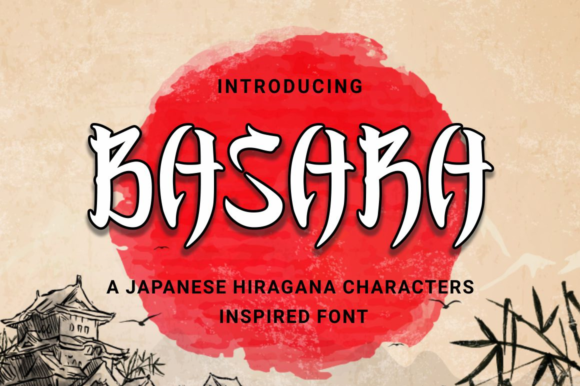
The core distinction of Basara lies in its authenticity. Unlike many fonts that merely mimic calligraphy with stiff, geometric strokes, Basara captures the fluidity and organic imperfection of traditional Japanese ink painting. It is engineered to look stunning on posters, flyers, and large-format prints where legibility at scale is paramount. However, before committing to this tool, one must weigh its unique characteristics against other display options available in the market.
Understanding the Unique Character of Basara
To make an informed decision, it is necessary to define what makes Basara different from standard sans-serif or serif display fonts. The primary feature of Basara is its variable stroke width. In traditional typography, lines are often uniform or follow strict mathematical rules. Basara, conversely, emulates the pressure applied by a brush tip. Thick downstrokes contrast sharply with thin upstrokes, creating a dynamic rhythm that mimics human movement.
This "cool and genuine" quality means the font carries an inherent energy. It does not sit passively on the page; it commands attention. This makes it particularly effective for headlines where the goal is to stop a viewer's scroll or catch the eye of a passerby. The design avoids the sterile perfection of vector-based lettering, instead offering a texture that feels hand-crafted even when rendered digitally.
- Organic Flow: The curves are not perfect circles but rather fluid arcs that suggest motion.
- Cultural Depth: The glyph shapes are rooted in Japanese calligraphic traditions, adding a layer of sophistication.
- High Impact: The weight distribution allows it to function as a visual anchor in complex layouts.
Evaluating Basara Against Alternative Display Styles
When researchers compare Basara to other display fonts, they typically encounter two main categories: Western-style grunge fonts and generic brush scripts. Understanding the tradeoffs between these options helps clarify why Basara might be the superior choice for certain projects.
Western grunge fonts often rely on distressed textures, splatters, and broken edges to convey an edgy vibe. While effective for punk rock aesthetics or horror themes, they can appear chaotic and difficult to read if overused. They often lack the structural integrity required for professional branding. In contrast, Basara maintains a high degree of legibility despite its rough edges. The structure remains intact, ensuring that the message is clear while still retaining an artistic flair.
Similarly, generic brush scripts found in many libraries often prioritize cursive connectivity over structural balance. These fonts can struggle with spacing and alignment, leading to uneven baselines that disrupt the flow of a poster. Basara addresses this by treating each character as a standalone piece of art that respects the grid. It offers the freedom of brushwork without sacrificing the orderliness needed for commercial design.
Another consideration is the comparison with standard sans-serif display fonts like Helvetica Bold or Futura Extra Bold. These are safe, neutral choices that work well for corporate identity but often fail to evoke emotion. If a designer needs to communicate tradition, strength, or artistic heritage, a neutral font may fall flat. Basara fills this gap by providing a strong emotional hook that a standard geometric font cannot replicate.
Best-Fit Scenarios for Implementation
Identifying the right use case is critical for maximizing the value of any design asset. Basara excels in environments where visual hierarchy needs to be established quickly and dramatically. Its ability to look stunning on any poster or flyer stems from its capacity to handle high-contrast backgrounds effectively.
For event marketing, such as music festivals, art exhibitions, or cultural workshops, Basara provides an immediate thematic link. If a flyer promotes a Japanese cuisine pop-up or a martial arts seminar, the font acts as a subtle yet powerful signifier of the content. It removes the need for additional imagery to set the mood; the typography itself tells the story.
- Large Format Print: The thick strokes ensure visibility from a distance, making it ideal for billboards and banners.
- Editorial Headlines: Magazines and zines can use Basara to break the monotony of body text, adding a touch of editorial flair.
- Brand Identity: Startups looking to position themselves as authentic, artisanal, or culturally connected can leverage the genuine feel of the font.
However, the effectiveness of Basara depends heavily on context. It is less suitable for long-form body text. The complexity of the brush strokes creates visual noise that can tire the reader's eye during extended reading sessions. In this regard, it functions best as a display element paired with a clean, simple sans-serif for secondary information.
Navigating Limitations and Tradeoffs
No single font is a universal solution, and Basara is no exception. One of the primary limitations to consider is its specificity. Because the style is so strongly tied to Japanese calligraphy, using it in contexts unrelated to that culture can feel jarring or inappropriate. For instance, applying Basara to a financial report or a medical brochure would likely clash with the expected tone of trust and precision associated with those industries.
Another tradeoff involves compatibility and technical performance. Fonts with complex stroke variations can sometimes cause rendering issues on older printers or low-resolution screens. Designers must ensure that their output settings are optimized to preserve the fine details of the brush tips. Additionally, licensing considerations are vital. High-quality display fonts often come with specific usage restrictions regarding web embedding or broadcast media. Professionals must verify the license terms to avoid legal complications, especially when working with clients who have strict compliance requirements.
There is also the risk of stylistic fatigue. Because Basara has a very distinct look, overusing it across multiple campaigns can lead to a homogenized brand identity. It is most effective when used sparingly as a highlight. If every headline in a campaign uses Basara, the impact diminishes, and the design loses its punch. The key is restraint; using the font only when the message requires that specific level of intensity.
Making the Final Decision
Ultimately, choosing Basara comes down to the specific goals of the project. If the objective is to create a sense of movement, authenticity, and cultural depth, Basara stands out as a top-tier option. It bridges the gap between traditional art forms and modern digital design, offering a versatility that few other fonts possess.
For designers comparing options, the evaluation should focus on the intended emotional response. Does the project need to feel energetic and raw? Does it require a connection to heritage? If the answer is yes, then Basara is likely the right tool. Conversely, if the project demands neutrality, minimalism, or maximum readability for dense data, a more conventional typeface would serve better.
Exploring the endless possibilities of Basara requires an open mind and a willingness to experiment. It invites designers to step away from the safety of standard grids and embrace the organic nature of brushwork. By integrating Basara thoughtfully into a layout, creators can produce work that not only looks stunning but also resonates on a deeper level with their audience. Whether for a bold poster or a refined flyer, this font offers a genuine way to elevate visual communication.
As you move forward with your next design challenge, consider the narrative you wish to tell. Let the unique attributes of Basara guide your decisions, ensuring that your typography supports your message with clarity and style. The result will be a design that honors both the craft of calligraphy and the demands of contemporary commerce.