Hot Spicy: A Comprehensive Evaluation of This Bold Display Typeface
In the crowded landscape of digital and print design, selecting the right typography is often the difference between a message that resonates and one that goes unnoticed. Designers constantly seek typefaces that can command attention without sacrificing legibility or aesthetic integrity. Among the various options available, Hot Spicy has emerged as a distinctive choice for projects requiring an immediate visual impact. This strong and rough brush display font offers a unique texture that mimics the fluidity of hand-painted strokes while maintaining the structural consistency required for commercial applications.
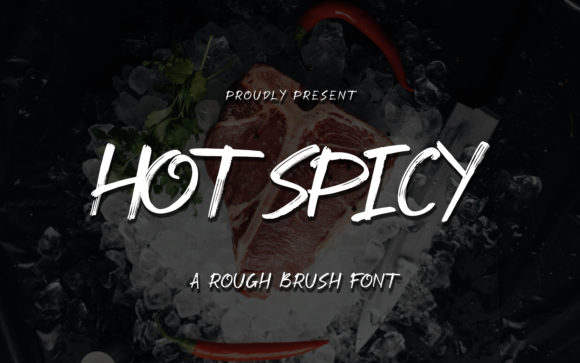
When evaluating Hot Spicy, it is essential to understand its specific character within the broader category of brush fonts. Unlike standard serif or sans-serif typefaces that prioritize neutrality, this font is designed to be expressive. Its defining characteristic is the rough, textured edge that simulates the friction of a brush against paper. This quality gives the text a raw, energetic feel that is particularly effective in contexts where emotion, urgency, or creativity needs to be conveyed instantly. For professionals aged 20 to 50 who are researching design resources, understanding the nuanced application of such a specialized tool is crucial for making informed decisions.
Distinguishing Features and Visual Impact
The primary appeal of Hot Spicy lies in its ability to transform standard headlines into dynamic visual elements. The font's construction features varying stroke widths that mimic the pressure changes of a physical brush. This variation creates a sense of movement even when the text is static. When used on posters or flyers, the rough edges catch the eye immediately, breaking the monotony of uniform typefaces that dominate modern interfaces.
This distinctiveness makes it particularly suitable for branding campaigns that aim to project an image of authenticity or rebellion. The "rough" aspect of the font suggests a human touch, which can be valuable in marketing strategies that seek to distance themselves from corporate sterility. However, this stylistic choice also introduces specific considerations regarding usage. The texture that provides character can sometimes interfere with readability if not managed correctly, especially at smaller sizes or in low-resolution formats.
- Texture: The rough edges provide a tactile quality that digital fonts often lack.
- Weight: As a strong display font, it commands space effectively in large formats.
- Voice: It conveys energy, passion, and a casual yet bold attitude.
Comparing Hot Spicy to Alternative Brush Styles
To make a well-rounded decision, designers must compare Hot Spicy against other categories of brush and display fonts. Not all brush typefaces are created equal; some lean towards elegance and calligraphy, while others focus on graffiti or street art aesthetics. Hot Spicy occupies a middle ground, offering a balance between artistic flair and structural stability.
Compared to highly stylized graffiti fonts, Hot Spicy is generally more legible. Graffiti styles often sacrifice letterform clarity for decorative complexity, making them unsuitable for conveying important information quickly. In contrast, the brush strokes in Hot Spicy maintain a clear baseline and recognizable character shapes. This makes it a safer choice for headlines that need to be read at a glance, such as event dates or promotional offers.
Conversely, when compared to elegant calligraphic scripts, Hot Spicy lacks the refined thin lines and delicate flourishes associated with luxury branding. If a project requires a sense of sophistication or high-end refinement, a script font with smoother transitions might be a better fit. Hot Spicy is inherently rugged; attempting to force it into a context requiring subtlety will likely result in a design that feels out of place rather than sophisticated.
Another point of comparison is with standard sans-serif display fonts. While standard fonts offer maximum clarity and versatility, they lack the emotional resonance provided by Hot Spicy. A designer choosing between a clean geometric sans-serif and Hot Spicy is essentially choosing between clarity and character. The former ensures the message is understood universally, while the latter ensures the message is felt emotionally. The best approach often involves using both strategically, reserving Hot Spicy for focal points.
Optimal Use Cases and Practical Applications
Understanding where Hot Spicy excels helps clarify its value proposition. The font is explicitly engineered for display purposes, meaning it is intended for headlines, titles, and short phrases rather than body copy. Its strength is most evident in large-scale print media. On posters and flyers, the rough texture adds depth that photographs and flat vector graphics often miss. This dimensionality can elevate a simple layout into a visually compelling piece.
For digital applications, the font performs well on social media graphics and website banners where visual impact is prioritized over detailed reading. The high contrast and bold nature of the letters ensure they stand out against busy backgrounds. However, designers should exercise caution when using it for web accessibility. The rough edges can reduce legibility for users with visual impairments or those viewing screens on older devices with lower pixel density.
- Event Posters: Ideal for music festivals, club nights, or community gatherings where energy is key.
- Product Packaging: Effective for food items, craft beverages, or limited-edition merchandise aiming for a handmade aesthetic.
- Social Media Campaigns: Great for creating shareable quotes or announcements that require immediate attention.
- Merchandise Design: Works well on t-shirts and tote bags where the rough texture complements fabric materials.
Evaluating Tradeoffs and Limitations
No single typeface is a universal solution, and Hot Spicy is no exception. While it offers stunning results in specific scenarios, there are inherent tradeoffs that designers must consider before committing to it. The most significant limitation is versatility. Because the font has such a strong personality, it can easily overpower a design if overused. Using it for subheadings or secondary information can create visual clutter and confuse the hierarchy of the content.
Additionally, the "rough" nature of the font requires careful kerning and spacing. The irregular edges of the letters can create uneven white space if characters are placed too closely together. This necessitates a higher level of manual adjustment compared to standard fonts, increasing the time required for the design process. For tight deadlines or automated design workflows, this added complexity might be a disadvantage.
There is also the consideration of audience perception. While the font conveys excitement and creativity, it may not align with brands that prioritize trust, stability, or professionalism. Financial institutions, healthcare providers, or legal firms would likely find Hot Spicy too informal and potentially untrustworthy for their core communications. In these cases, the font's strengths become weaknesses, undermining the credibility of the message.
Making the Final Decision
Ultimately, the choice to use Hot Spicy depends on the specific goals of the project and the target audience. If the objective is to create a memorable, high-energy visual statement that stands out in a crowded marketplace, this font is a powerful tool. Its ability to look stunning on any poster, flyer, or print medium makes it a valuable asset for designers working in event promotion, entertainment, and lifestyle sectors.
However, if the project requires long-form readability, formal tone, or subtle elegance, alternative options should be explored. The decision should not be based solely on the novelty of the font but on whether its characteristics serve the communication strategy. By carefully weighing the strengths of Hot Spicy against its limitations and comparing them to other available styles, designers can ensure they select the right tool for the job.
Exploring the endless possibilities of this font requires experimentation. Try pairing it with clean, minimalist sans-serifs to balance its intensity. Test it in different weights and sizes to find the sweet spot where the rough texture enhances rather than hinders the message. With thoughtful application, Hot Spicy can transform a standard design into a striking piece of visual communication that captures the viewer's imagination.