Unlocking the Joy of Kudofun: A Practical Guide for Playful Designs
If you are looking to inject a genuine sense of wonder into your next project, Kudofun is more than just another typeface; it is an invitation to play. This cool, jolly, and playful display font captures the essence of childhood imagination without feeling childish or unprofessional when used correctly. Whether you are a small business owner launching a kids' brand, an educator creating engaging lesson materials, or a marketer trying to break through the noise with bright colors, understanding how to wield this tool effectively is crucial.
Many designers rush to download free fonts or grab whatever looks "fun" on a whim, only to end up with a design that feels chaotic or difficult to read. Avoid this trap by approaching Kudofun with intention. It is not merely a decorative element; it is a strategic choice that can elevate your visual communication if paired with the right context and color palette.
Understanding the Personality of Kudofun
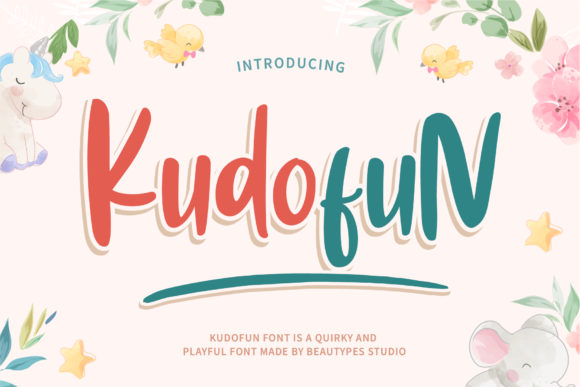
The primary reason people seek out Kudofun is its unique ability to convey energy and warmth. Unlike rigid serif fonts or sterile sans-serifs, this display font possesses a rounded, bouncy character that suggests movement and happiness. It is specifically engineered for children-themed designs, but its appeal extends to any scenario where you want to signal friendliness and approachability.
When combined with bright colors like sunny yellow, electric blue, or vibrant coral, Kudofun creates a dynamic visual hierarchy that draws the eye immediately. However, the magic lies in the balance. If you use too much of it, the design can become overwhelming. The goal is to let the font's personality shine as a headline or a focal point while letting other elements support it.
Common Pitfalls in Font Selection
One of the most frequent mistakes creators make is assuming that a "fun" font works for everything related to fun. You might be tempted to use Kudofun for the entire body text of a brochure or a long-form blog post. This is a critical error. Display fonts are designed for short bursts of impact, not for extended reading. Using them for paragraphs can cause reader fatigue and significantly reduce comprehension.
Another oversight involves ignoring the contrast between the font and the background. Because Kudofun has such distinct curves and varying stroke widths, low-contrast backgrounds (like light gray on white) can make the letters look muddy or indistinct. To ensure high readability, always pair this font with solid, bold backgrounds or ample whitespace that allows the characters to breathe.
Evaluating Usability and Context
Before you commit to using Kudofun, ask yourself what message you are trying to communicate. If you are designing a logo for a serious financial firm, even one with a playful mascot, this font might undermine your authority. Conversely, if you are creating a banner for a summer camp or a party invitation, it is likely the perfect fit.
Consider the medium as well. On large screens or printed posters, the details of the font are visible and appreciated. However, on very small mobile screens, the intricate details of a display font can sometimes blur or disappear. Always test your design at actual size before finalizing it. What looks magnificent on a desktop monitor might become illegible on a smartphone screen if the font weight is too thin or the spacing is too tight.
- Check the kerning: Some display fonts have tight default spacing that looks good in isolation but terrible in a full sentence. Adjust tracking manually to ensure the words flow naturally.
- Verify the language support: Ensure the version of Kudofun you download supports all the characters you need, including accents or special symbols, especially if your audience is international.
- Assess the licensing: Not all "free" fonts allow for commercial use. Always read the license agreement to avoid legal issues later, particularly if you are selling products featuring this typography.
The Color Connection
The prompt mentions that Kudofun is perfect when combined with bright colors, but there is a nuance here. Bright colors are high-energy, and the font is high-energy. If you combine both at maximum saturation, the result can be visually jarring. Instead, try using the font in a dark, strong color against a bright background, or vice versa. This creates a pop effect that is exciting rather than exhausting.
For example, imagine a flyer for a children's art class. Using Kudofun in a deep navy blue on a bright yellow background creates a classic, high-contrast look that is easy to read and instantly cheerful. Alternatively, using the font in white with a subtle drop shadow on a colorful gradient can add depth without sacrificing legibility.
Practical Steps for Better Results
To avoid the common mistakes discussed above, adopt a methodical approach to your design process. Start by defining your core message. Is it excitement? Is it safety? Is it creativity? Once you know the tone, select Kudofun as your headline font to set that mood.
- Pair wisely: Never leave Kudofun alone. Pair it with a clean, neutral sans-serif font for body text. This contrast ensures that while the headlines grab attention, the information remains accessible.
- Limit usage: Use the font sparingly. One or two words per line are often enough. Let the negative space do some of the work.
- Test accessibility: Check your color combinations for accessibility standards. Even playful designs should be readable by everyone, including those with visual impairments.
- Review the file: Before downloading, inspect the font file to ensure it includes necessary weights (like Bold or Italic) if you plan to vary the emphasis in your design.
By taking these steps, you move from simply "using a font" to strategically applying a design asset. This distinction separates amateur attempts from professional-grade work. Remember, the best designs are those that communicate clearly while still being memorable.
Moving Forward with Confidence
Ultimately, the success of your project depends on how well you integrate Kudofun into your overall visual strategy. Do not let the fun nature of the font distract you from the fundamentals of design: clarity, hierarchy, and purpose. When you respect the characteristics of the typeface and apply it with care, you create work that resonates with your audience.
Whether you are building a brand identity, crafting a social media campaign, or designing educational materials, Kudofun offers a versatile solution for adding a touch of joy. By avoiding the pitfalls of overuse and poor pairing, you ensure that your message is not just seen, but felt. Take the time to experiment, test, and refine, and you will find that this playful font is a powerful ally in your creative toolkit.